Explore St. Louis

A private preview prepared for the Explore St. Louis selection committee.

A private preview prepared for the Explore St. Louis selection committee.

Explore St. Louis's own research names it, and it's the right diagnosis. Experience exceeds perception. Visitors rate St. Louis highly. Everyone else underestimates it. Every campaign dollar spent on the surface of that gap has done what campaign dollars do: not much, when the gap is structural.
The problem was never reach.
A city that argues with itself, city vs. county, municipality vs. municipality, neighborhood vs. neighborhood, cannot be heard by the rest of the world with one voice. When a place does not have a unified story, the vacuum fills with someone else's: crime charts, population graphs, downtown vacancy rates. The story goes to whoever shows up with a megaphone.
The gap is not a marketing problem. It's a structural one.
A crowd sings to itself in a town square. The town didn't hire a marketing firm. It just became the place this happened.
People do not travel to places. They travel to magnetism. To a song that spills into a street. To a dish they can't get anywhere else. To a neighborhood they've seen on their phone thirty times without knowing why. Modern travel is a pilgrimage to magnetism.
None of these places were invented by tourism boards. They were discovered through the cultural output they could not help but produce. Tourism is a receipt. Culture is the purchase.
In 1876, the City of St. Louis voted to separate itself from St. Louis County. Historians call it the Great Divorce. A hundred and fifty years later, we still haven't come back together. The region now draws lines — between ninety municipalities inside the county alone, between zip codes, between school districts, between neighborhoods — with the same care it once drew them on maps. Pride becomes possession. Identity becomes rivalry. And the world outside hears a chorus that cannot agree on what it's singing.
We are not just St. Louis City vs. St. Louis County. We are Kirkwood, Webster, Clayton, Ferguson, Florissant, O'Fallon, Soulard, Dogtown, The Hill, Compton Heights — each carrying its own story, each quietly suspicious of the others.
National media fills the vacuum with whatever is loudest. Crime graphs get the clicks. Downtown vacancy gets the coverage. Meanwhile, the most consequential parts of this city's present and future go under-covered — or get filed as something else entirely.
A hundred and fifty years is long enough. We don't need another campaign. We need an act of unbinding.
 Earth.
Claim a different frame entirely. St. Louis belongs in conversation with Lisbon. Copenhagen. Melbourne. Small-population cities whose cultural output punches so far above their weight that the rest of the world has no choice but to pay attention.
The case is not aspirational. It is historical. It is measurable. And the first evidence is already in the nameplate:
Not a case we are building. A case that has already been built.
The largest city in North America north of Mexico. Peak population ~15,000–20,000 — larger than contemporary London. A planned metropolis of pyramids, plazas, and astronomical alignment, built by the Mississippian civilization directly across the river from modern downtown St. Louis.
Brokered through St. Louis. The United States doubles in size. The ceremony of transfer — flag lowered from French to Spanish to American in 72 hours — happens on what is now the St. Louis riverfront.
Launch from St. Louis for the Pacific. The first American transcontinental reach. The city is literally marked as the starting point of the modern American footprint.
The case that forced the Civil War is filed in the St. Louis courthouse. A city already arguing with itself about the largest question a country can ask.
The ice cream cone, the hot dog, iced tea, and Dr Pepper all popularized here. 7UP invented in St. Louis a few years later. The city hosts both a World's Fair and the Olympics simultaneously — a feat since unmatched.
Charles Lindbergh's solo transatlantic flight. Funded by St. Louis businessmen. Named for this city. The plane that connected the modern world is named for the city the world keeps forgetting about.
Scott Joplin composes ragtime in St. Louis. Chuck Berry invents rock-and-roll guitar. Miles Davis grows up across the river. Josephine Baker leaves St. Louis and remakes Paris. T.S. Eliot and Tennessee Williams remake American literature. Maya Angelou is born here. Nelly is shaped here.
Twitter, Square, Block, Bitcoin, and AI — the public square of the internet is architected by kids from St. Louis.
Ground breaks on the $1.7B National Geospatial-Intelligence Agency HQ. 3,100 of the country's top intelligence analysts relocate to North St. Louis. The U.S. government plants a flag on St. Louis for national-security infrastructure.
Major League Soccer's newest club sells out every home match at Citypark. STL earns new international non-stop routes. The regional ambition lands in the infrastructure.
Six St. Louis chef and restaurant nominations in a single year — the highest per-capita culinary recognition rate of any city of comparable size in America.
The brand platform that finally names what all of this already is.
"St. Louis, Earth" is a platform — not a tagline. A brand system that flexes across every audience, every partner, every neighborhood, every sub-initiative, without fragmenting. Five pillars hold it up. Two of them begin with the same prefix on purpose — because the boundary problem has two sides, and the reframe has to resolve both.
One punctuation mark, doing more work than any tagline could. Not "St. Louis of Earth." Not "St. Louis: Earth." The comma says "and also." It is a humble brag — the most St. Louis thing a brand could do. And because it is a comma, it is infinitely portable:
Every neighborhood keeps its name. Every partner keeps its identity. Every municipality keeps its pride. And all of them — finally, together — get to claim Earth. The boundary problem does not get solved by drawing a new line. It gets solved by giving everyone the same one.
| Leisure travelers | Witness a world-class city the rest of the world hasn't figured out yet. |
|---|---|
| Meetings & conventions | Host your event in a city where the culture is the amenity. |
| Filmmakers | Tell stories in a city writing one of the most interesting comeback narratives on earth. |
| Regional partners | Join the coalition rebranding a region. Your brand benefits from the rising tide. |
| Residents | We're incubating your culture and giving it a global stage. You're not a spectator — you're the show. |
| Corporate & investors | The world-class city with world-class value. Get in before everyone else figures it out. |
| International | St. Louis, Earth — a cultural epicenter you've been sleeping on. |
In 1874, James Eads built the first steel bridge ever constructed, across the Mississippi, anchored to the riverbed from caissons dug by hand through a hundred feet of mud. Nobody had done it before. Many experts insisted it could not be done. It held then. It holds now.
A bridge built in St. Louis connected two halves of a country. A bridge built by St. Louis now connects a fractured region to the world.
The conventional DMO spends an annual budget persuading people to visit. Explore St. Louis has done that capably for decades, and the limits of that model are now visible: no amount of promotion can close the gap between experience and perception if the underlying product is not generating its own cultural heat.
The Bridge is the mechanism for generating that heat. An operating system for Explore St. Louis's second act, a system that does not market culture; it incubates culture, and lets the culture do the marketing. Concretely, it is three things: an endowment, a program slate, and a signature moment.
The St. Louis region produces roughly $177B in annual GDP. The top 15 corporations headquartered here generate a combined $250B+ in global revenue. Washington University's endowment alone is approximately $15B. The philanthropic infrastructure is deep, sophisticated, and under-tapped for civic brand investment. A $25–50M seed endowment is not an ask that strains this region. It is an ask that has never been properly made.
Target: $10–15M · avg $500K–$1M each Centene, Emerson, Edward Jones, Bunge, Post Holdings, Ameren, Reinsurance Group of America, Peabody Energy, Olin, Graybar, Caleres, Energizer, Spire, Enterprise Holdings, Anheuser-Busch. A $1M gift from Centene is 0.0007% of their annual revenue. Not a stretch. A rounding decision.
Target: $5–8M combined The Danforth Foundation, The Whitaker Foundation, Greater St. Louis Community Foundation, Taylor Family Foundation, Pulitzer Arts Foundation, Arch Grants, Monsanto Fund, Emerson Charitable Trust.
Target: $3–5M A portion of annual campaign spend redirected from traditional media buys into the endowment seed. Not additional cost — a strategic redeployment. The campaign dollars that would have chased the gap now fund the mechanism that closes it.
Target: $5–10M combined City of St. Louis, St. Louis County, Greater St. Louis Inc., Washington University, SLU, BJC, Cortex Innovation Community, Missouri Division of Tourism, NEA and EDA grant programs. Plus regional philanthropic families whose names already sit on buildings here.
Endowment funds Programs. Programs produce Content and Events. Content and Events generate Brand heat. Brand heat drives Visitation and Investment. Visitation and Investment grow the Endowment. The loop does not require annual agency retainers to sustain itself. That is the definition of a platform.
Le Pont is the annual, multi-day cultural summit of St. Louis, Earth. Every program of The Bridge culminates here — The Table's finals, The Stage's headliner showcase, The Gallery's juried opening, The Lab's pitch summit, The Trail's endurance moment, The Story's documentary premiere — compressed into one St. Louis weekend.
It is the city's answer to SXSW, Wonderful Copenhagen's strategic platform, and Melbourne's cultural calendar — but it is uniquely St. Louis: a jazz-festival-meets-innovation-summit-meets-James-Beard-dinner-meets-bridge-crossing. The Eads Bridge itself becomes a ceremonial stage — opening night dinner on the bridge, from the Illinois side to the Missouri side, 2,000 seats, one shared table across the Mississippi.
The RFP's Q&A addendum named this as a critical deliverable. Three tiers of participation, each protecting the platform's integrity while inviting every corner of the region in.
An endowment that keeps compounding. A year-round cultural slate that keeps producing. A signature festival that keeps the world tuned in. A platform that keeps every partner aligned. And — quietly, finally — a city whose perception has caught up with its reality.
Brand performance strategy lives at the intersection of consulting rigor and creative conviction. Most agencies sit on one side of that line. Spinoza was built for the crossing. Here is how we deliver — mapped one-to-one to the five phases Explore St. Louis named in the RFP.
This is a strategic partnership, not a project. The retainer covers all five RFP phases, ongoing stewardship that follows, quarterly platform reviews, annual evolution cycles, and direct access to the Spinoza partners and luminary network. We propose an initial 12-month engagement at the upper end, with a renewal conversation at month 10 informed by progress and need.
Spinoza is neither a creative agency nor a management consultancy. It is the category we built when we couldn't find one that fit — where the consulting rigor is real and the creative conviction is non-negotiable. We take engagements that require both. We decline the ones that don't.
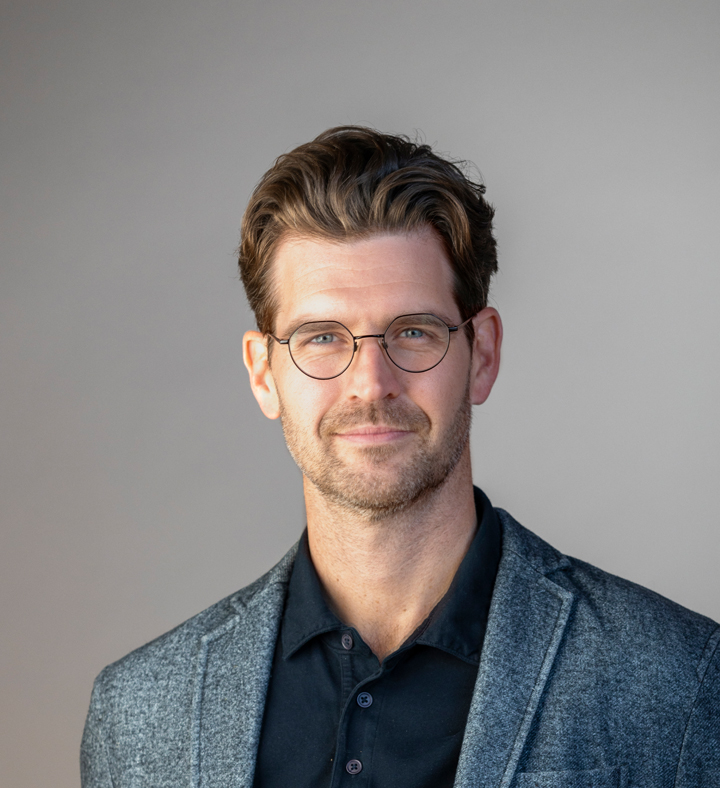
Ryan's career has run through New York, London, and destination markets from Tokyo to Cannes — two decades of brand strategy work for Fortune 500 companies, global consultancies, and venture-backed challengers.
He is also the son of an anthropologist, an avid traveler, and the father of four.
He did not choose St. Louis. He moved here reluctantly. Then he discovered what is genuinely the hardest thing to discover about this city: that it is a world-class place hiding in plain sight.
What followed was an immigrant's conviction. In the years since, Ryan has:
This response is not a pitch from an outside agency. It is a plan from a resident with receipts.
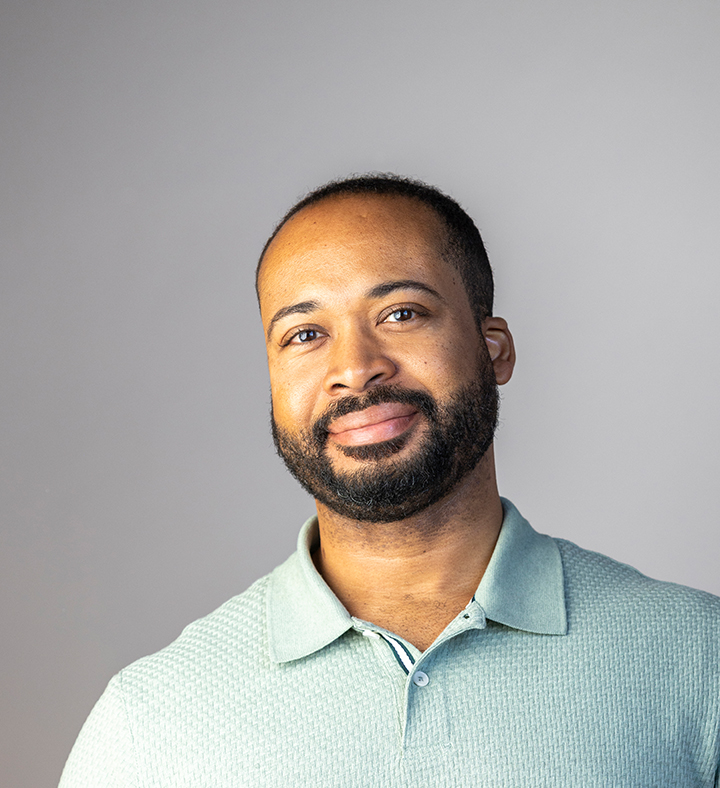
Philip is a proud St. Louisan and cultural enthusiast — a bellwether food critic among the city's restaurateurs, and a brand strategist whose two-decade career includes helping scale Centene into the corporate juggernaut and St. Louis anchor institution it is today.
He is currently a member of Focus Saint Louis, the region's premier leadership development program — a cohort of civic and economic leaders being developed as the next generation of stewardship. That seat gives Spinoza direct, real-time visibility into the rooms where the region's future is being discussed.
A brand for St. Louis cannot be built from outside those rooms. Ours is being built from inside them.
Destination marketing is not an adjacent capability for Spinoza. It is a through-line — in the principal's career, in the firm's network, and in the partnerships we have built on the places and platforms where the world is already paying attention.
"Ryan is always looking for the edge — and he finds it for his clients through the blend of intelligent strategy, concise brand voice, and a relentless appetite for new ideas and new technology. He is a problem-solver who exceeds every expectation to deliver breakthrough, award-winning work."
Our work does not begin with a creative brief. It begins with a problem statement. Three recent examples — kept short, because each is its own scroll.
Every agency responding to this RFP has a reason to want the work. Most of those reasons are professional. Ours is personal.
Ryan's kids will grow up in a city whose national reputation will be shaped by the answer to this RFP. Philip's cohort in Focus Saint Louis will inherit the civic stewardship of whatever brand platform the region adopts next. Spinoza's first public civic act is this response.
We are not submitting a proposal. We are planting a flag.
You have just scrolled through the first cultural act of St. Louis, Earth. The platform is live. The comma is planted. The Bridge is named. Le Pont has its date on the calendar as soon as you say so.
Let's give the world the St. Louis it hasn't met yet.
Learn More About Spinoza